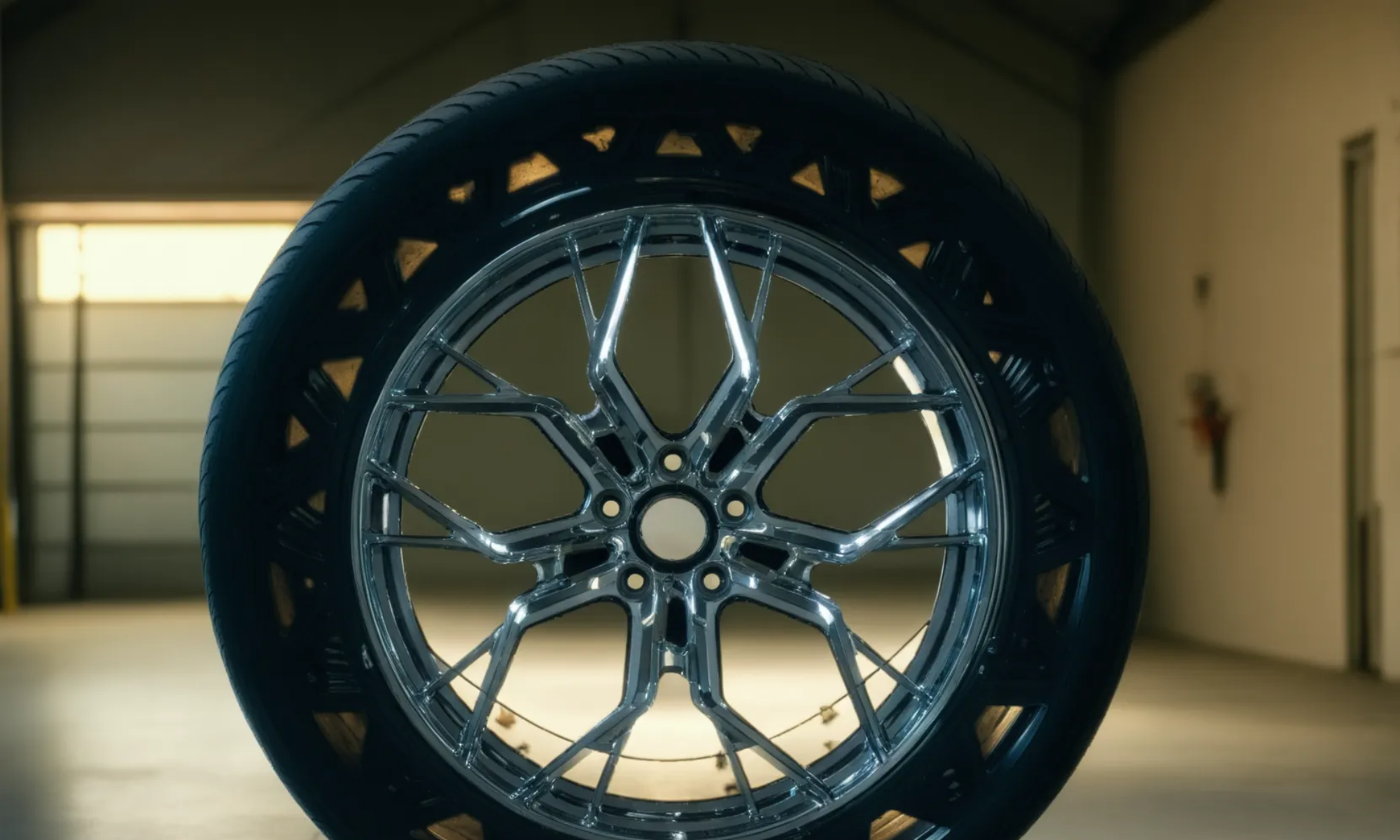
impact metrics for funding auto ERW production and deployment
Below are specific impact metrics for the automotive Energy Return Wheel (ERW), focusing on how various funding levels translate into tangible outcomes related to efficiency, production, and environmental benefits. The ERW aims to be the most efficient high-speed airless tire in the world, with a validated rolling resistance coefficient of 0.0117 at 70 MPH
how you can help
Automotive Energy Return Wheel (ERW),
Efficiency & Performance Testing
- $5,000 – High-Speed Coast-Down Analysis: Funds one day of independent laboratory testing at a facility that specializes in Airless Tire testing to validate the ERW’s superior coast-down time (e.g., 55 MPH to 0 in 18.6 seconds for an ERW vs. 12.2 seconds for a pneumatic tire at 35.5 PSI).
- $5,000 – Drivetrain Efficiency Certification: Funds third-party testing to officially certify the 16-22% improvement in overall drivetrain efficiency for electric vehicles, directly translating to increased battery range.
- $25,000 – Aerodynamic Heat Dissipation Study: Supports a study focused on mitigating heat dissipation issues common in rigid airless tires at high speeds, funding the design and testing of our exclusive heat sink that optimize cooling and airflow.
Production & Scaling Milestones
- $50,000 – First-Generation OEM Prototype (Single Wheel): Funds the manufacturing of one full-scale automotive prototype optimized for a specific OEM (e.g., Tesla) pilot program, including load-bearing fiberglass and other composite structures.
- $100,000 – Material Composition Optimization: Supports research into Robotics, 3D printing and advanced composites, enabling rapid simulation of new structural geometries for improved durability and weight optimization, accelerating R&D cycles.
- $500,000 – Industrial Molding Equipment: Procures the necessary injection or compression molding equipment for the Fusion Fiber, Nano Rubber airless layer, a key step to move beyond prototypes into mass production, which is a major opportunity for market expansion
Sustainability & Lifecycle Impact
- $10 – End-of-Life Material Recovery: Prevents one full scrap tire from entering the annual 200 million-tire waste stream by funding the sorting of a single ERW’s 100% recyclable core skeleton and tread.
- $10,000 – Eco-Friendly Material Certification: Funds the research and validation needed to switch from traditional vulcanized rubber to eco-friendly raw materials or advanced carbon nanotube-reinforced composites in the tread production.
- $1 Million – Waste Elimination for a Fleet Partner: Funds the initial investment for a fleet partner (e.g., last-mile delivery vehicles) to convert their entire fleet to airless technology, saving energy, eliminating 100% of flat tires, associated downtime, and ongoing maintenance costs
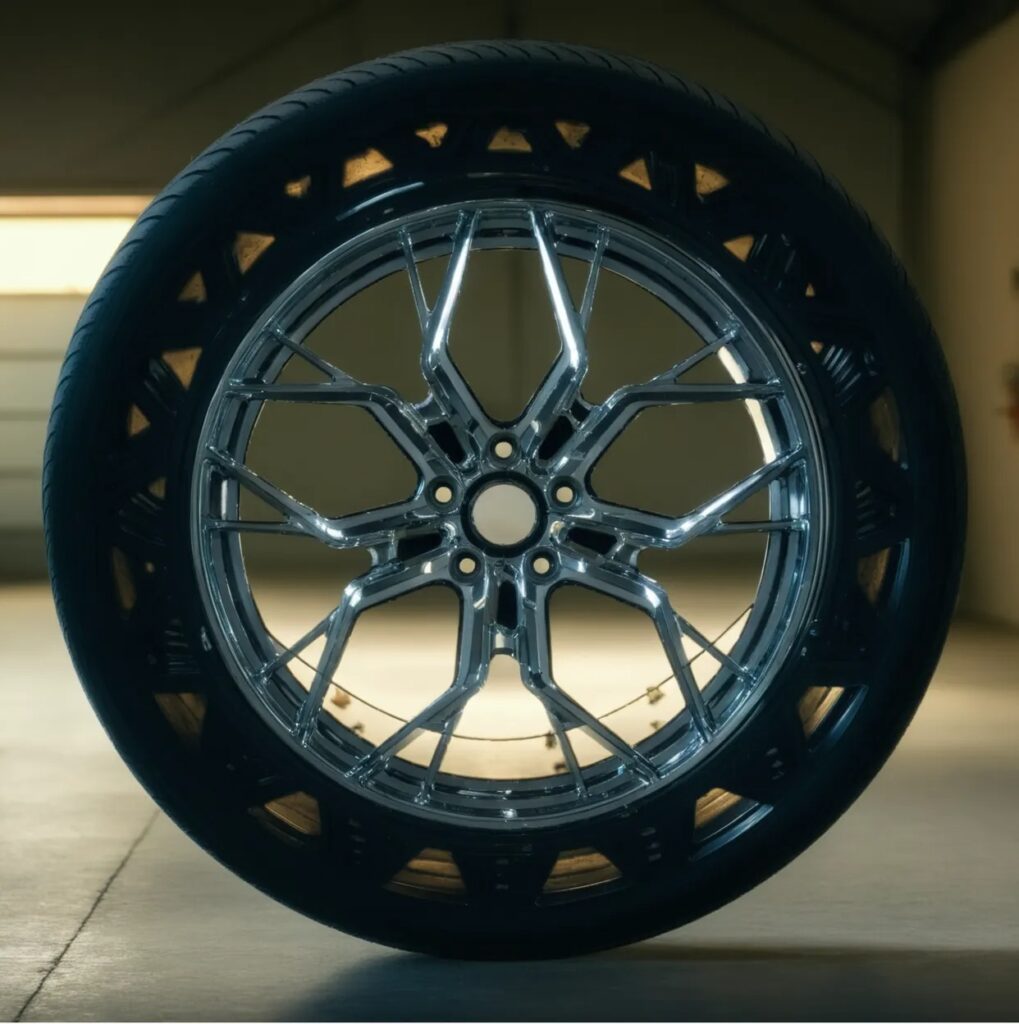
Automotive ERW

Automotive ERW

Automotive ERW

Comparative Impact Metrics for Automotive ERW
| Feature | ERW/Concept Design Impact |
|---|---|
| Energy Efficiency | Up to 16-22% improvement in drivetrain efficiency compared to air-filled tires. |
| Maintenance | Zero-maintenance airless design eliminates downtime from punctures or pressure loss. |
| Sustainability | Replaceable tread layers reduce total tire waste; core structures are often 100% recyclable. |
| Safety | Non-pneumatic structures prevent high-speed blowouts, a critical safety factor for 2025 autonomous vehicle standards. |