our Story
The Science of Movement
Energy Return Wheel (ERW) wasn’t born in an automotive lab—it was born from a deep obsession with how the human body moves, recovers, and excels. Our founder, Brian A Russell, has spent his career challenging the status quo of physics to create tools that work with energy, rather than against it.

Brian A Russell
Inventor


the sanddune
The Foundation: The Sanddune Stepper
The journey began with a breakthrough in rehabilitation and fitness: the Sanddune Stepper. Brian invented this “flex-able” foam exerciser to mimic the therapeutic resistance of walking on sand. By creating a multi-layered, unstable surface, he discovered a way to engage stabilizer muscles and improve neuromuscular coordination while protecting the joints. Today, the Sanddune Stepper remains a gold standard for balance training and post-surgical recovery, proving that the right material can transform physical performance.


BRitek footwear
The “Super Shoe” Breakthrough
Brian then turned his attention to the world of elite athletics. Before “super shoes” became a marathon staple, Brian invented a revolutionary footwear technology that redefined efficiency. In independent testing, his design achieved a staggering 15% lower pulse rate and oxygen consumption at speeds of 10.5 mph. By capturing the energy of a foot strike and returning it to the runner, he proved that mechanical energy storage could significantly reduce the metabolic cost of movement.


Reinventing the Wheel
It was this success in footwear that led Brian to a radical realization: If a shoe could return energy to a runner, why couldn’t a tire do the same for a vehicle?
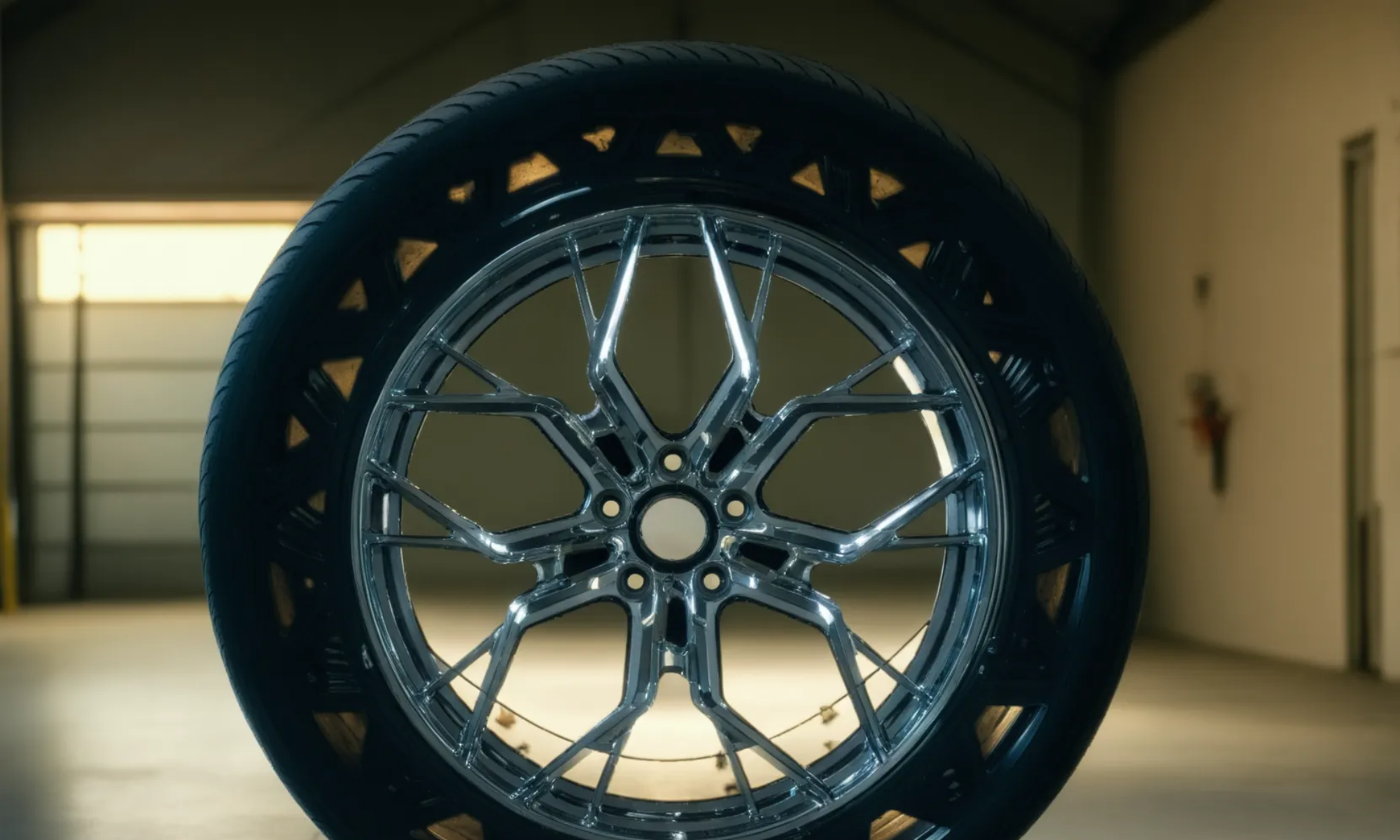
Traditional pneumatic tires are passive; they absorb impact and dissipate energy as heat. Brian set out to build an “Active Tire.” The result is the Energy Return Wheel (ERW). By replacing air with a patented system of rubber stretched over carbon-fiber-reinforced composite rods, the ERW functions as a 360-degree slingshot.
Why ERW is the Future of Mobility
Taking the lessons learned from the Sanddune Stepper’s impact absorption and the Super Shoe’s efficiency, the ERW offers 2025 riders:
- 16–22% Increase in Drivetrain Efficiency: Extending the range of e-bikes and the speed of traditional cycles.
- Anti-Bounce Stability: Inspired by the Sanddune’s “leveling” effect, the ERW spans potholes and absorbs road vibration for a smoother, safer ride.
- Zero Downtime: A completely airless, puncture-proof design that eliminates flats forever.
From the sand to the track to the trail, Brian A. Russell’s inventions share a single mission: to harness the power of energy return to help the world move further, faster, and more efficiently.


